
| Blog
Last updated: Oct 7, 2026
Consider a buyer, we will call her Priya, who has found a plot near Kancheepuram at a good price. The seller’s papers look in order. Then she reads the patta and sees three names on it, not one. A friend calls it a joint patta. The seller’s uncle calls it a kootu patta (கூட்டு பட்டா). Priya has the question almost every buyer asks at this point: is this plot safe to buy, or is it a problem?
The honest answer is that it is often fine, with the right checks. This guide explains what a joint patta means, what to check before you pay, and what to expect after you buy.
✓ QUICK ANSWER
Joint Patta (Kootu Patta): Quick Answer
Yes, you can buy a plot that has only a joint patta, if the seller’s portion is clearly described, undisputed, and every co-owner with a claim agrees to the sale. A patta is the Revenue Department’s record of who holds the land. It is not, by itself, proof of title. What protects you is the registered sale deed and the chain of earlier deeds behind it.
The practical difficulty comes after you buy. With a joint patta, the new patta for your portion usually needs a sub-division application, and many banks hesitate to lend until it is done. So check carefully first, and plan for the follow-up.
Table of Contents
What Is a Joint Patta (Kootu Patta)?
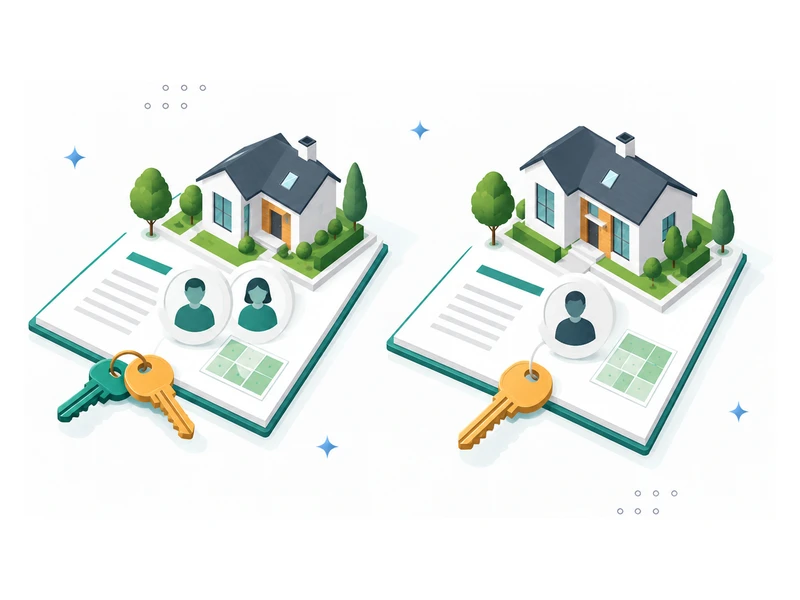
A patta is the Revenue Department’s record of who holds a piece of land and pays revenue on it. A joint patta, called kootu patta (கூட்டு பட்டா) in Tamil and also spelled kuttu patta, lists several people against the same land and the same survey number. This happens even when each of them uses a separate part of the land.
A joint patta does not mean the land is illegal or in dispute. It usually means the division was never recorded in the revenue records. The common causes are family land passing to several heirs, several people buying together, or a layout that has not yet been formally sub-divided.
What Is an Individual Patta?
An individual patta, or thani patta (தனி பட்டா), lists the owner of a portion of land that has its own sub-number, such as 45/1, usually one person or the people who bought that portion together. It is the clearer record for a sale, a loan or a building approval.
| At a glance | Joint patta (kootu patta) | Individual patta (thani patta) |
|---|---|---|
| Names on the record | Several co-owners on one patta | The owner of that portion only |
| How the land is recorded | One shared holding under one survey number | A portion with its own sub-number |
| Typical origin | Inherited or jointly bought land, or a layout not yet sub-divided | Land that has been formally sub-divided |
| Bank loans | Lenders often hesitate until it is sub-divided | Generally straightforward |
| After you buy | The patta for your portion usually needs a sub-division application | The patta transfer follows the normal process; in eligible cases it can update automatically after registration |
| Can you buy it? | Yes, after the checks below | Yes, standard process |
Neither kind of patta is proof of title on its own. Your title comes from the registered sale deed and the chain of earlier deeds.
Can You Buy a Plot That Has Only a Joint Patta?
Yes, but not blindly. The deciding question is whether the seller can give you a clearly marked, undisputed portion. That usually means one of two things: every co-owner on the patta signs the sale deed, or a registered partition deed has already given the seller that portion. Without either, the seller can generally sell only an undivided share, and you would join a shared holding.
Where the land has been properly divided, or every co-owner joins the sale, a joint patta is mainly a gap in the revenue records rather than a defect in your title. That gap can usually be closed after you buy, through a patta transfer with sub-division.
Is It Safe to Buy a Plot With a Joint Patta?
It can be reasonably safe, but only when a few conditions are met. The patta alone does not tell you. These two lists do.
It is reasonably safe when:
- Every co-owner signs the sale deed, or a registered partition deed already divides the land and defines the seller’s portion.
- The sale deed and layout plan describe exactly which portion you are buying, with its extent and boundaries, and those match the FMB sketch.
- Access and usage rights for that specific plot are defined.
- The Encumbrance Certificate and parent deeds show a clean chain of title. On joint patta land, a search by survey number alone often shows other co-owners’ and neighbours’ entries, so also search by a detail unique to this property, such as the document number and year or the owner’s name.
- Property tax receipts are up to date.
- The land records show no government claim, court order or other entry that would stop the patta for your portion being processed.
Pause, or walk away, when:
- A co-owner cannot be found, or objects to the sale.
- There is no partition deed and no written consent from the other names on the patta.
- The extent on the patta, the FMB sketch and the deed do not match.
- There is a pending court case or dispute over the land.
- The seller cannot show where your portion is on the ground, or pushes you to skip the checks.
If you are unsure which list your plot belongs in, that is the moment for a document review before you pay an advance, not after.
What Can Go Wrong After You Buy
- A loan that is refused or delayed. Many banks and housing finance companies want a separate record for the portion they will lend against.
- A co-owner who objects after you pay. This is why every co-owner’s consent, or a registered partition deed, matters before the sale.
- A slower patta transfer. Because your portion needs sub-division and survey work, it takes longer than a simple transfer. The official benchmark for cases with sub-division is 30 days from the application, set by a 2011 Government Order, and in practice it often takes longer.
- A harder resale. The next buyer will ask the same questions, until the portion has its own patta.
Which Situation Applies to You?
- You are buying land where the seller has only a joint patta: use the checks above before you commit.
- You are buying land that already has an individual patta: the standard purchase checks apply. If you are buying only part of that land, the patta for your part will still need a sub-division.
- You already co-own land under a joint patta and want your own patta: that is a division of the land, not a purchase, and it follows a separate sub-division process, which our guide to getting an individual patta from a joint patta walks through. Pinewood can guide you through it too.
How Pinewood Helps
We review the patta, Chitta, FMB sketch, Encumbrance Certificate and sale deed together, so you know what each one shows before you commit. We check the seller’s share and the co-owners’ consent, and after the purchase we coordinate the sub-division and the individual patta in your name. Where a co-owner disputes the division, an advocate’s advice comes first.
Considering a Plot With a Joint Patta?
A joint patta doesn’t automatically mean a purchase is risky, but it does mean extra verification before you commit.
- Verifying the seller’s share is clear and uncontested
- Checking layout plans and sale deed descriptions
- Confirming co-owner consent where needed
- Applying for your individual patta after purchase
Frequently Asked Questions
Is a joint patta the same as a kootu patta?
Yes. Kootu patta (கூட்டு பட்டா) is simply the Tamil term for a joint patta, and you will also see it spelled kuttu patta.
Is a joint patta proof of ownership?
No. A patta is the Revenue Department’s record of who holds the land. Legal title comes from a registered sale deed and an unbroken chain of earlier deeds, not from the patta alone.
Can banks refuse a loan on land with only a joint patta?
Yes. Many banks and housing finance companies hesitate to lend against joint patta land unless it has a clear sub-division or an individual patta, even when the purchase itself is legally valid.
What if the other co-owners do not consent to the sale?
Without a partition deed or clear consent from the other listed owners, the purchase carries a real risk of future disputes. This is one of the first things to verify before you go ahead.
Does buying from a joint patta mean I will share ownership with other people?
It depends on how the land has been divided. If every co-owner signs the sale deed, or a registered partition deed has already given the seller a separate portion, you buy that defined portion. If neither is true, one co-owner can generally transfer only his undivided share, so you would join the other co-owners in a shared holding until the land is divided. Before you pay an advance, Pinewood reviews the patta, the sub-division records and the sale documents to show which of these applies to your plot.
How long does it take to get an individual patta after buying?
It depends on the Taluk office and on how straightforward the sub-division is. The official benchmark for cases involving sub-division is 30 days from the application, set by a 2011 Government Order, and the survey work often makes it longer.
Sources & Official References
- Tamil Nadu e-Services of Land Records (eservices.tn.gov.in), Government of Tamil Nadu: “Apply Online Patta Transfer”, “View Patta / Chitta / FMB (Rural / Natham)” and “FMB Sketch (Rural / Natham)” services, checked October 2026.
- Commissionerate of Land Administration, Government of Tamil Nadu, “Patta Transfer” page (cla.tn.gov.in/patta_transfer.html): time limits under G.O.(Perm) No. 210 of 2011 and the Online Patta Transfer System under G.O.Ms.No. 303 of 2016, checked October 2026.
- Transfer of Property Act, 1882, Section 44 (transfer by one co-owner), checked October 2026.
- Pinewood guides: Tamil Nadu Land Records Explained (Patta, Chitta, Adangal and FMB) and Patta Transfer in Tamil Nadu: SRO to Revenue Records Explained.